In uncertain times, traditional stocks can be a roller-coaster of highs and lows. For the risk-averse investor, each dip can bring a pang of anxiety. Enter SPLV, the Invesco S&P 500® Low Volatility ETF, an investment designed to smooth out the ride. Let’s delve into the details of SPLV and understand why it might be the right fit for your portfolio.
SPLV stands for Invesco S&P 500® Low Volatility ETF. It’s an exchange-traded fund that focuses on stocks from the S&P 500 Index exhibiting the lowest volatility over the past 12 months. Rather than chasing the highest returns, SPLV seeks to minimize the bumps along the way by investing in typically more stable companies.
Investment Strategy
The ETF selects the 100 least volatile stocks in the S&P 500, allocating more weight to those with the least variation in their share price. It provides exposure to utilities, health care, and consumer staples—industries less sensitive to economic cycles. By doing so, SPLV may underperform during market rallies but offers potential protection in downturns.
Benefits of SPLV
– Risk Management: By investing in low-volatility stocks, SPLV can help reduce portfolio risk without complete withdrawal from the equity markets.
– Diversification: SPLV’s sector allocation differs from the broader S&P 500, offering diversification benefits in contrast to market-cap-weighted index funds.
– Dividends: The fund’s holdings often pay stable dividends, providing an additional income stream for investors.
Performance
SPLV’s performance won’t typically match the S&P 500 since it aims to lower volatility, not maximize gains. The ETF seeks to deliver a more consistent return, even if it means occasionally trailing the high-flying stocks. In times of market stress, SPLV has historically lost less than the market average, an attractive feature for conservative investors.
Incorporating SPLV into your portfolio can be a move towards stability, especially if you are nearing retirement or have a low tolerance for risk. It can serve as a defensive anchor, potentially offsetting losses in more volatile investments.
Drawbacks
While stability is an advantage, there’s a trade-off. SPLV may lag during bull markets when high-volatility stocks outperform. Investors with a long-term perspective and higher risk tolerance may find SPLV too conservative.
Conclusion
For those looking to dial back the risk in their investment approach, the Invesco S&P 500® Low Volatility ETF (SPLV) offers a solution. By leaning into sectors known for their stability and sustained performance in the face of market turmoil, SPLV allows investors to stay the course with reduced exposure to drastic swings.
Remember, every investment carries some risk, and it’s important to review an ETF’s prospectus and consult a financial advisor to ensure it aligns with your investment goals and strategy.
Happy investing, and may your portfolio glide steadily on the waves of the financial markets with the inclusion of SPLV.
Embracing Global Opportunities with Canadian International ETFs
In the ever-evolving world of investment, Canadian International ETFs have emerged as pivotal tools for diversifying portfolios beyond domestic borders. These ETFs provide a pathway to the diverse and dynamic landscapes of international and emerging markets, offering Canadian investors a unique opportunity to engage with global economic trends. This exploration delves into the essence of international and emerging market ETFs, highlighting their strategic role in modern investment portfolios.
Section 1: The Diverse World of International and Emerging Market ETFs
International ETFs open doors to developed markets around the globe, offering exposure to varied economies, from the technological hubs of Asia to the mature markets of Europe. Emerging market ETFs, meanwhile, present a different flavor of investment, focusing on high-growth economies like India and China. These markets offer higher growth potential but come with their own set of risks, including political instability and market volatility. The key for investors is understanding these diverse landscapes and how they can complement a well-rounded investment strategy.
Section 2: The Strategic Importance of Diversification through ETFs
Investing in international and emerging market ETFs is crucial for diversification, reducing reliance on any single market’s performance. These ETFs enable investors to tap into different economic cycles, often providing balance during domestic market downturns. The potential for higher returns in emerging markets, coupled with exposure to unique sectors not prevalent in Canada, makes these ETFs attractive for growth-oriented investors. They offer a balanced approach to investment, combining the potential for high returns with the stability offered by more developed markets.
Vanguard FTSE Developed All Cap ex North America Index ETF (VIU)
This ETF stands as a beacon for investors seeking broad exposure beyond North America. It tracks the performance of a comprehensive index of large-, mid-, and small-cap companies across developed markets, excluding the U.S. and Canada. With its diverse range of holdings, VIU offers a balanced representation of global economies, making it a solid choice for those looking to tap into international markets.
Actual Management Fee
0.20%
Actual Mgmt. Expense Ratio (MER)
0.23%
Top Holdings: The fund covers a wide range of companies across emerging markets, including significant positions in Alibaba Group Holding, Tencent Holdings, and Reliance Industries Limited, encompassing technology, e-commerce, and energy sectors.
iShares Core MSCI Emerging Markets IMI Index ETF (XEC)
XEC is a gateway to the vibrant and often volatile emerging markets. It seeks to replicate the performance of the MSCI Emerging Markets Investable Market Index, encompassing a wide spectrum of large, mid, and small-cap companies in various emerging economies. This ETF is an ideal instrument for investors aiming to capture the growth potential of these rapidly evolving markets, though it comes with a higher risk profile.
Actual Management Fee
0.25%
Actual Mgmt. Expense Ratio (MER)
0.27%
Top Holdings: The fund primarily invests in large companies in emerging markets, such as Alibaba Group Holding, Tencent Holdings, and Taiwan Semiconductor Manufacturing.
BMO MSCI EAFE Index ETF (ZEA)
Focusing on developed markets outside North America, ZEA tracks the MSCI EAFE Index. It offers investors exposure to a diverse set of economies in Europe, Australasia, and the Far East. This ETF is designed for those looking to invest in stable, yet internationally diverse markets, providing a counterbalance to North American-centric portfolios.
Actual Management Fee
0.20%
Actual Mgmt. Expense Ratio (MER)
0.22%
Top Holdings: ZEA’s holdings predominantly include large-cap firms in developed markets, like Roche Holding AG, Toyota Motor Corporation, and Novartis AG, covering sectors from pharmaceuticals to automotive.
Vanguard FTSE Emerging Markets All Cap Index ETF (VEE)
VEE provides a broad exposure to emerging markets, capturing the performance of large, mid, and small-cap companies. It’s a comprehensive ETF for investors looking to dive deep into the emerging markets’ pool, offering a blend of risk and opportunity inherent in these rapidly growing economies.
Actual Management Fee
0.23%
Actual Mgmt. Expense Ratio (MER)
0.24%
Top Holdings: The fund covers a wide range of companies across emerging markets, including significant positions in Alibaba Group Holding, Tencent Holdings, and Reliance Industries Limited, encompassing technology, e-commerce, and energy sectors.
Selecting the right ETF requires a careful consideration of various factors. Investors should align their choices with their individual risk tolerance, investment goals, and the ETF’s cost structure, including expense ratios and transaction fees. Researching the fund’s historical performance, understanding the sectors and countries it invests in, and considering the fund manager’s expertise are also crucial steps.
Risk Management and Diversification
While international and emerging market ETFs offer exciting opportunities, they also come with their own set of risks. Political and economic instability in certain regions, currency fluctuations, and market volatility are common challenges. Diversifying across different ETFs and balancing them with domestic investments can help mitigate these risks.
Monitoring and Rebalancing
Investing in these ETFs is not a set-it-and-forget-it strategy. Continuous monitoring and periodic rebalancing are essential to ensure that the investment remains aligned with one’s financial goals and risk tolerance. Global economic conditions evolve, and so should your investment strategy.
In the dynamic world of investing, biotechnology ETFs stand as a compelling avenue for investors seeking exposure to the innovative biotech sector. These funds offer a diversified portfolio across a range of companies, from emerging startups to established giants, involved in groundbreaking work in medicine, agriculture, and environmental sciences. While the biotech industry is known for its volatility, driven by factors like clinical trial results and regulatory changes, biotechnology ETFs mitigate this risk by spreading investments across various firms. This makes them an attractive option for those looking to tap into the sector’s growth potential without the risks associated with individual stock investments.
Section 1: Understanding Biotechnology ETFs
What are Biotechnology ETFs?
Biotechnology Exchange-Traded Funds (ETFs) are investment funds traded on stock exchanges, much like stocks. They primarily invest in companies in the biotechnology sector, which includes firms engaged in the research and development, manufacturing, and marketing of products and services based on genetic and molecular biology. These companies range from small start-ups focusing on specific diseases to large pharmaceutical corporations with diverse biotech portfolios.
Diversifying with Biotech ETFs
Investing in biotech ETFs offers investors a way to gain exposure to this dynamic and potentially lucrative industry without having to bet on the success of a single company. Given the high-risk nature of biotech investments – where a single clinical trial result can significantly impact a company’s stock price – ETFs offer a diversified approach. They spread the risk across a basket of biotech firms, mitigating the impact of any single company’s performance on the overall investment.
Biotech ETFs vs. Other Sector ETFs
Biotech ETFs differ from other sector-specific ETFs in their focus on a highly specialized and research-intensive industry. Unlike sectors that respond primarily to macroeconomic trends, biotech is often driven by unique factors such as clinical trial outcomes, regulatory approvals, and scientific breakthroughs. This sector’s performance is less correlated with the broader market trends, making biotech ETFs a valuable tool for portfolio diversification.
Best Biotechnology ETFs in the US
iShares Nasdaq Biotechnology ETF (IBB)
Assets Under Management (AUM): Approximately $9.20 billion (as of early 2023).
Inception Date: February 5, 2001.
Expense Ratio: 0.45%.
One of the most well-known biotech ETFs. IBB Seeks to track the investment results of the NASDAQ Biotechnology Index, composed of biotechnology and pharmaceutical equities listed on the NASDAQ, aiming to offer exposure to U.S. biotechnology and pharmaceutical companies known for innovation and research
SPDR S&P Biotech ETF (XBI)
Assets Under Management (AUM): Around $6.69 billion (as of early 2023).
Inception Date: January 31, 2006.
Expense Ratio: 0.35%.
Offers exposure to biotech stocks in the S&P Biotechnology Select Industry Index. XBI Aims to provide investment results that correspond to the S&P Biotechnology Select Industry Index, targeting companies in the biotechnology sector, which may include small- and mid-cap biotechnology firms involved in medical research and development.
First Trust NYSE Arca Biotechnology Index Fund (FBT)
Assets Under Management (AUM): Approximately $1.55 billion (as of early 2023).
Inception Date: June 19, 2006.
Expense Ratio: 0.55%.
Tracks an equal-weighted index of biotech firms. FBT Seeks to replicate the performance of the NYSE Arca Biotechnology Index, investing in firms listed on the NYSE Arca that are primarily involved in the use of biological processes to develop products or provide services.
ARK Genomic Revolution ETF (ARKG)
Assets Under Management (AUM): Around $3.30 billion (as of early 2023).
Inception Date: October 31, 2014.
Expense Ratio: 0.75%.
Focuses on companies likely to benefit from extending and enhancing the quality of human and other life by incorporating technological and scientific developments in genomics into their businesses.
Best Biotechnology ETFs in Canada
BMO Equal Weight US Health Care Hedged to CAD Index ETF (ZUH)
Assets Under Management (AUM): 308 M
Inception Date: April 19, 2011.
Expense Ratio: Approximately 0.40%.
While not exclusively a biotech ETF, it offers significant exposure to the biotech sector, along with other health care segments. ZUH Aims to replicate the performance of the Solactive Equal Weight US Health Care Hedged to CAD Index, offering diversified exposure to U.S. healthcare companies, equally weighted, and hedged to the Canadian dollar.
iShares S&P/TSX Capped Health Care Index ETF (XHC)
Assets Under Management (AUM): 570 M
Inception Date: March 19, 2010.
Expense Ratio: Approximately 0.61%.
Includes Canadian health care companies, with exposure to biotech firms. XHC Seeks to provide long-term capital growth by replicating the performance of the S&P/TSX Capped Health Care Index, focused on Canadian companies in the healthcare sector, including biotechnology and pharmaceuticals.
The Growth of the Biotech Sector
Historical Performance
Historically, the biotechnology sector has been a powerhouse of growth, driven by innovation and significant scientific breakthroughs. Over the past few decades, advancements in genetics, personalized medicine, and biopharmaceuticals have transformed healthcare and provided substantial returns for investors. However, it’s also important to note the sector’s volatility, with periods of rapid growth often followed by sharp declines.
Future Prospects and Current Trends
The future of biotechnology looks promising, fueled by ongoing advancements in areas like gene editing (CRISPR technology), regenerative medicine, and the development of new therapeutic modalities. The global push for healthcare innovation, particularly in the wake of the COVID-19 pandemic, has put biotech companies at the forefront of medical research and development.
Impact of Global Events
The biotech sector’s growth has been significantly influenced by global events such as pandemics. For instance, the COVID-19 crisis accelerated vaccine development, bringing unprecedented attention and investment to biotech firms. This scenario highlighted the sector’s critical role in addressing global health challenges and its potential for rapid growth in response to societal needs.
XDIV ETF Investment objectif
XDIV invests in Canadian stocks with strong financials. The companies selected pay above-average dividend yields and have either paid steady or increasing dividends.
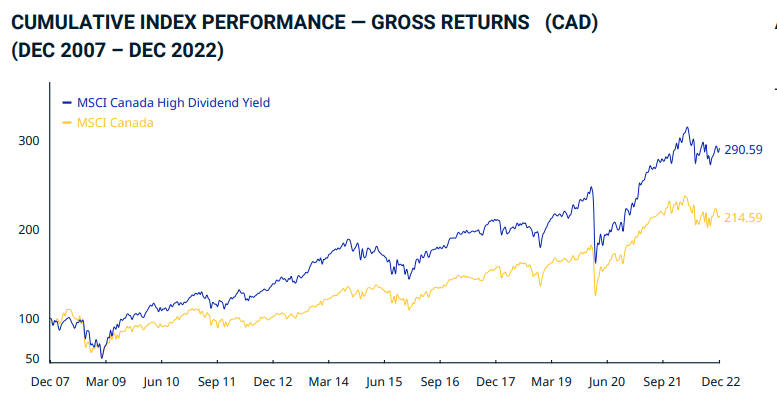
XDIV is an index ETF that holds the constituents of the MSCI Canada High Dividend Yield. The replicated index is a quality index that includes strict criteria to achieve an equity portfolio of companies with solid fundamentals. Since XDIV is a dividend ETF, the focus is on achieving sustainable and persistent dividend payments.
Find below more details on the selection process:
targets companies with high dividend income
only stocks with higher than average dividend yields
companies with a track record of consistent dividend payments and with the capacity to sustain dividend payouts into the future
additional factos: return on equity (ROE), earnings variability, debt to equity (D/E), and price performance (past 12 months)
10% security capped index
MSCI vs MSCI Canada High Dividend Yield – gross return comparison
– Total return: Though the focus here is on the dividend yield, you have to keep in mind the total return. The profit or loss we make on any investment combines both dividend income and capital gain or loss. Looking at the long-term performance of the fund is crucial. An ETF that provides a good capital appreciation with a high dividend yield is preferable.
–Diversification: A diversified ETF is always a safer option. Some high yield ETFs are sector-specific (Financials, Energy or Gold). The ones focused on Energy and Gold have had an inferior long-term performance and carry high volatility risk.
–Volume and liquidity of the ETF. The higher the asset under management, the lower the trading costs of the ETF (difference between the bid and ask price).
XDIV ETF Dividend distribution
Amount
Ex-Div Date
Record Date
Pay Date
Declare Date
0.1300
3/22/2024
3/25/2024
3/28/2024
3/18/2024
0.1300
2/23/2024
2/26/2024
2/29/2024
2/16/2024
0.1300
1/25/2024
1/26/2024
1/31/2024
1/19/2024
0.1030
12/28/2023
12/29/2023
1/4/2024
12/20/2023
0.1030
11/21/2023
11/22/2023
11/30/2023
11/15/2023
XDIV ETF portfolio
Name
Weight (%)
ROYAL BANK OF CANADA
8.74
SUN LIFE FINANCIAL INC
8.60
MANULIFE FINANCIAL CORP
8.57
BANK OF NOVA SCOTIA
8.56
FORTIS INC
8.15
TORONTO DOMINION
8.00
RESTAURANTS BRANDS INTERNATIONAL I
7.54
ROGERS COMMUNICATIONS NON-VOTING I
6.72
SHAW COMMUNICATIONS INC CLASS B
5.62
EMERA INC
4.44
Sector breakdown
Type
Fund
Financials
50.40
Communication
18.77
Utilities
16.83
Consumer Discretionary
10.05
Energy
1.91
Materials
1.72
Cash and/or Derivatives
0.34
Introduction
For Canadian investors eyeing the growth of the NASDAQ-100 Index similar to the American QQQ ETF, comprehending the intricacies of investing in a U.S.-traded ETF versus opting for a QQQ Canadian equivalent that tracks U.S. equities is essential. We’ll explore the Canadian alternatives to QQQ and discuss the implications for investors in Canada.
Understanding QQQ
The Invesco QQQ Trust (QQQ) is an ETF that tracks the performance of the NASDAQ-100 Index. This a basket of 100 of the largest non-financial companies listed on the NASDAQ stock exchange. Here’s why it stands out:
Low Expense Ratio:
One of the appealing aspects of QQQ is its relatively low expense ratio, making it a cost-effective way to gain exposure to most influential tech companies. The lower fees mean that more of the investment return is passed on to the investors.
Historical Performance:
Historically, QQQ has exhibited strong performance, primarily due to the robust growth of the technology sector. Its concentration in large-cap tech stocks like Apple, Microsoft, and Amazon has allowed it to benefit from the significant gains in this sector. Investors are often attracted to QQQ due to its track record of substantial returns, especially during periods market growth.
Tech-Focused, Growth-Oriented:
QQQ is the a preferred vehicle for investors looking to capitalize on the growth and innovation in the tech sector. As the tech industry has been a leading driver of market performance, QQQ’s focus aligns well with investors’ desire for growth and sector-specific exposure.
Diversification within Tech Dominance:
While technology giants dominate QQQ’s portfolio, it also includes companies from the consumer services, healthcare, and communication sectors, among others. This offers a diversified exposure within the context of a tech-heavy investment. And, it’s appealing to those looking for a balance between specialization and diversification.
In the landscape of ETFs tracking the NASDAQ-100 Index, the performance of QQQ and its Canadian equivalents, particularly ZNQ and ZQQ, are noteworthy. Generally speaking, the performance of QQQ and ZNQ is closely aligned, indicating that ZNQ is effective in mirroring the NASDAQ-100’s performance while being accessible to Canadian investors through the Toronto Stock Exchange.
ZQQ, on the other hand, presents itself as a hedged ETF. This means it aims to minimize the impact of currency fluctuations between the Canadian dollar and the U.S. dollar on its returns. As a result, while it also tracks the NASDAQ-100, its performance may differ from that of QQQ and ZNQ due to this hedging strategy. This difference is not necessarily indicative of better or worse performance but reflects the impact of currency movements on the investment returns. For investors concerned about currency risk, ZQQ offers a way to gain exposure to the NASDAQ-100’s growth while potentially reducing the volatility that can come from fluctuating exchange rates.
In summary, QQQ provides a close performance mirror to the NASDAQ-100 for U.S. investors, while ZNQ offers a similar reflection for Canadians. ZQQ adds an extra layer of currency hedging, which can lead to performance differences, especially beneficial for those looking to mitigate currency risk. Each ETF serves different investor needs based on their investment strategy, risk tolerance, and currency preferences.
The Difference from a Canadian Investor Perspective
Investing in U.S. Traded ETFs (like QQQ)
Currency Exchange: When Canadian investors put money into U.S. traded ETFs such as QQQ, they must deal with currency exchange. Since these investments are denominated in U.S. dollars, Canadians need to convert their CAD to USD. Thus incurring currency exchange fees and exposing themselves to currency risk. The value of their investment may fluctuate not just with the market performance but also with the CAD/USD exchange rate, which can add an unpredictable element to returns.
Tax Considerations: Investing in U.S. ETFs introduces specific tax implications for Canadian investors. Dividends from U.S. securities are subject to withholding taxes, which can diminish the net income received.
Access and Trading: Accessing U.S. traded ETFs means using a brokerage platform that allows trading on U.S. exchanges. While many Canadian brokers offer this service, it might come with higher trading fees compared to domestic trades. Moreover, investors might find the process more cumbersome and the trading hours less convenient, considering the time zone differences between Canada and U.S. market hours.
QQQ Canadian Equivalent (like HXQ or ZNQ)
Best QQQ Equivalent ETFs: ZNQ and ZQQ
Currency Benefits: Opting for Canadian ETFs like ZNQ or ZQQ, which trade in Canadian dollars on the Toronto Stock Exchange, eliminates the need for Canadians to convert funds to USD, avoiding currency conversion fees and risks. This aspect makes investing in U.S. equities more straightforward and potentially more cost-efficient for Canadians.
Tax Advantages: ETFs such as ZNQ and ZQQ are designed with Canadian investors in mind, often employing strategies to reduce withholding taxes on dividends and negate U.S. estate tax implications. This structuring means Canadians may enjoy enhanced tax efficiency, making these ETFs a smarter choice compared to their U.S. counterparts for those concerned with optimizing after-tax returns.
Ease of Trading: Canadian investors benefit from the convenience of trading ZNQ and ZQQ on the TSX, accessible during Canadian market hours. This local listing means investing in a familiar regulatory environment, using Canadian dollars, and enjoying the ease of using local platforms. These factors collectively make ZNQ and ZQQ attractive for those seeking user-friendly access to U.S. markets.
Why These Differences Matter
When deciding between U.S. and Canadian ETFs, investors must consider currency risk and costs, tax implications, and accessibility. Direct investment in U.S. ETFs like QQQ exposes Canadians to currency fluctuations and conversion fees, whereas Canadian ETFs trading in CAD, like HXQ or ZNQ, offer a more straightforward approach with possible currency hedging. Tax-wise, U.S. ETFs may subject Canadians to withholding taxes on dividends, while Canadian ETFs are often structured for better tax efficiency. As for accessibility, U.S. ETFs require trading on U.S. exchanges, potentially incurring higher fees and complexity, while Canadian ETFs are easily traded on Canadian platforms. These differences significantly affect the overall convenience, cost, and return of investments, making it vital for investors to consider their personal situation and seek advice tailored to their investment goals and tax circumstances.
Conclusion
Canadian investors looking to mirror the tech-heavy and growth-oriented profile of the QQQ have viable options with Canadian ETFs like HXQ and ZNQ. Choosing between investing in a U.S. traded ETF or a Canadian ETF tracking U.S. equities involves weighing factors like currency exchange, tax implications, and trading convenience. Each investor’s situation is unique, and it’s important to consider these aspects in light of personal investment goals and strategies. Consulting with a financial advisor to navigate these choices and understand all implications is always a wise step. Invest wisely and stay informed!
Introduction
In our Harvest ETF reviews, we delve into the diverse array of ETFs offered by Harvest Portfolios Group, each designed to cater to specific sectors and investment strategies. Renowned for their emphasis on generating income, these ETFs have garnered attention from a broad spectrum of investors. Our objective review will dissect the strategies, sector focuses, and overarching methodologies of some of the leading Harvest ETFs, providing clarity on how they may align with your investment goals and portfolio needs.
Covered Call Strategy in Harvest ETFs
Many of Harvest ETFs employ a covered call strategy to enhance income return for investors. This involves holding a portfolio of stocks and selling call options on the same stock. It’s a popular strategy for income-focused funds, including those by Harvest. Understanding how this works, along with its advantages and drawbacks, is crucial for investors considering these ETFs.
How Covered Call Strategy Works in Harvest ETFs
Holding Stocks: Initially, the ETF holds shares of companies, often in specific sectors like healthcare, technology, or energy.
Selling Call Options: The fund then sells call options on these stocks. Essentially, they’re giving someone else the right to buy the stock at a predetermined price within a specific period.
Generating Income: The fund earns income from selling these options, which is then distributed to shareholders, typically resulting in higher yield distributions.
Advantages of Covered Call Strategy
Enhanced Income: The primary advantage is the generation of additional income from the premiums received from selling the call options, which can be especially attractive in low yield environments.
Downside Protection: Premiums received can offer some downside protection. In a falling market, the income from the options can offset some of the capital losses from the underlying stock.
Portfolio Stability: This strategy can potentially reduce volatility in the ETF’s returns, as income is generated consistently from the option premiums.
Drawbacks of Covered Call Strategy
Capped Upside: When a call option is sold, the maximum profit from the underlying stock is capped. If the stock surges past the strike price of the option, the ETF doesn’t benefit from those additional gains, as the stock might be called away.
Complexity and Costs: Implementing a covered call strategy adds complexity to fund management, which can lead to higher costs. These might include transaction fees and the need for more active management.
Underperformance in Bull Markets: In strong bull markets, the covered call strategy might lead to underperformance relative to the market or similar ETFs without such a strategy. This is because the potential high returns from the stocks are limited due to the sold call options.
Covered Call Strategy in Context of Harvest ETFs
Harvest ETFs, such as HHL, HTA, HPF, HBF, and HRIF, utilize this strategy aiming to provide a mix of income generation and growth. Each ETF applies the covered call strategy in line with its sector focus and investment objectives. For example, an ETF focusing on tech might sell calls against a portion of its holdings in high-growth tech stocks, aiming to balance income with growth potential.
While the covered call strategy can enhance income and provide some level of protection in down markets, it’s important for investors to be aware of the trade-offs, especially the capped upside potential and the possibility of underperformance during strong market rallies. Investors interested in Harvest ETFs should consider how these strategies align with their income needs, risk tolerance, and investment horizon.
SYMBOL
NAME
FUND INCEPTION DATE
HHL.TO
Harvest Healthcare Leaders Income ETF
Mar 9, 2020
HTA.TO
Harvest Tech Achievers Growth & Income ETF
May 25, 2015
HPF.TO
Harvest Energy Leaders Plus Income ETF
Oct 20, 2014
HBF.TO
Harvest Brand Leaders Plus Income ETF
Mar 9, 2020
HRIF.TO
Harvest Diversified Equity Income ETF
Apr 12, 2023
HUTL.TO
Harvest Equal Weight Global Utilities Income
Harvest Healthcare Leaders Income ETF (HHL)
Strategy & Holdings: HHL invests in 20 leading healthcare companies globally, aiming for equal weight distribution. The sector’s resilience and growth prospects make it attractive.
Performance & Risks: While healthcare is seen as a defensive sector, regulatory changes and rapid innovation can impact performance. Reviewing past performance and sector trends is key.
Name
Weight
Country
Agilent Technologies, Inc.
5.6%
United States
Boston Scientific Corporation
5.3%
United States
Danaher Corporation
5.3%
United States
Abbott Laboratories
5.2%
United States
Medtronic PLC
5.2%
United States
Thermo Fisher Scientific Inc.
5.2%
United States
UnitedHealth Group Incorporated
5.0%
United States
HTA – Harvest Tech Achievers Growth & Income ETF
Strategy & Holdings: Focusing on large-cap technology firms, HTA seeks growth and income. The technology sector offers high growth potential but comes with higher volatility.
Performance & Risks: The fast-paced nature of tech means quick gains but also significant risks. Investors should consider their appetite for risk and sector cycles.
Name
Weight
Country
CrowdStrike Holdings, Inc.
5.9%
United States
Salesforce, Inc.
5.6%
United States
ServiceNow, Inc.
5.3%
United States
Intuit Inc.
5.2%
United States
Motorola Solutions, Inc.
5.2%
United States
Synopsys, Inc.
5.2%
United States
Micron Technology, Inc.
5.0%
United States
Oracle Corporation
5.0%
United States
HPF – Harvest Energy Leaders Plus Income ETF
Strategy & Holdings: By investing in a diversified portfolio of the world’s largest energy companies, HPF aims for regular income and capital appreciation.
Performance & Risks: Energy markets are often volatile, influenced by geopolitical and environmental factors. While the sector can offer high returns, it can also present significant risks.
Name
Weight
Country
Phillips 66
5.7%
United States
Enbridge Inc.
5.5%
Canada
Pembina Pipeline Corporation
5.5%
Canada
TC Energy Corporation
5.5%
Canada
Canadian Natural Resources Limited
5.1%
Canada
Eni S.p.A.
5.1%
United States
TotalEnergies SE
5.1%
United States
HBF – Harvest Brand Leaders Plus Income ETF
Strategy & Holdings: HBF targets globally recognized brands, aiming for steady income and growth by investing in companies with strong brand value.
Performance & Risks: Well-known brands can provide stability, but shifts in consumer preferences and global economic conditions can affect performance.
Name
Weight
Country
JPMorgan Chase & Co.
5.2%
United States
Verizon Communications Inc.
5.2%
United States
Morgan Stanley
5.1%
United States
NIKE, Inc.
5.1%
United States
Alphabet Inc.
5.0%
United States
Costco Wholesale Corporation
5.0%
United States
United Parcel Service, Inc.
5.0%
United States
HRIF – Harvest Retirement Income ETF
Strategy & Holdings: Designed for retirement income, HRIF focuses on equities known for dividends and stability. It’s diversified across sectors to manage risk.
Performance & Risks: HRIF’s focus on income may appeal to retirees, but like all investments, it’s subject to market fluctuations and specific sector risks.
ETF Name
Weight
Sector
Harvest Brand Leaders Plus Income (HBF)
14.4%
Diversified
Harvest Equal Weight Global Utilities Income (HUTL)
14.3%
Utilities
Harvest Canadian Equity Income Leaders (HLIF)
14.0%
Diversified
Harvest Tech Achievers Growth & Income (HTA)
13.9%
Information Technology
Harvest US Bank Leaders Income (HUBL)
13.7%
US Banks
Harvest Healthcare Leaders Income (HHL)
13.4%
Health Care
Harvest Travel & Leisure Income (TRVI)
13.3%
Diversified
Harvest Premium Yield Treasury (HPYT)
2.7%
Government Bonds
HUTL – Harvest Equal Weight Global Utilities Income
The investment objective of the Harvest Equal Weight Global Utilities Income ETF is to provide investors with exposure to the defensive and income-generating characteristics typically associated with utility companies, while also seeking to minimize concentration risk and provide broader exposure to the global utility sector.
In simpler terms, the ETF aims to provide investors with a way to potentially make money by investing in a diversified portfolio of utility companies from around the world. Because utility companies provide essential services and are generally seen as stable and reliable, the ETF may be attractive to investors looking for a way to generate steady income and potentially reduce their investment risk.
The Harvest Equal Weight Global Utilities Income ETF is an investment fund that aims to help investors make money by investing in a diversified portfolio of utility companies from around the world, including Canada, the United States, Europe, and Asia.
Utility companies are businesses that provide essential services like electricity, water, and gas to homes and businesses. They are generally seen as stable and reliable because people need these services no matter what’s happening in the economy.
The ETF invests in a portfolio of utility stocks that is equally weighted. This helps to spread out the risk and make sure that no one company has too much influence over the performance.
Conclusion
When considering Harvest ETFs, it’s crucial to look at individual investment goals, risk tolerance, and the ETFs’ expense ratios and performance history. While Harvest’s offerings provide opportunities for income and sector-specific exposure, investors should be mindful of the inherent risks and market fluctuations. Diversification, even within a portfolio of ETFs, can help manage risk. Always consider consulting with a financial advisor to ensure that any investment aligns with your long-term financial objectives. Whether you’re drawn to the potential stability of healthcare, the rapid growth of technology, the dynamics of energy, or the resilience of global brands, understanding each sector’s nuances will guide you to make informed decisions. Happy and informed investing!
If you’re looking for stable income and a degree of capital preservation, chances are you’ve considered Canadian utility-focused Exchange Traded Funds (ETFs). Two popular options are ZWU and UMAX. Each offers exposure to this essential sector, but there are notable differences you’ll want to understand before investing.
What are ZWU and UMAX?
ZWU (BMO Covered Call Utilities ETF): ZWU seeks to mirror the Solactive Equal Weight Canada Utilities Index while using a covered call options strategy to enhance income. Its holdings comprise Canadian utility companies involved in power generation, transmission, and distribution.
UMAX (Hamilton Enhanced Utilities Yield Maximizer ETF): UMAX aims to give investors higher monthly income by investing in Canadian and US utilities and employing a similar covered call strategy. Unlike ZWU, UMAX also includes telecoms, pipelines, and railways within its ‘utilities’ definition.
Key Differences
Sector Exposure: The most significant difference is ZWU’s exclusive focus on traditional utilities, while UMAX broadens its scope. This broader exposure means UMAX may potentially offer slightly more diversification, but the flip side is greater volatility due to pipeline and railway companies being more sensitive to economic cycles.
Holdings: Because of their different focuses, the top holdings within ZWU and UMAX differ. ZWU’s top holdings are typically large, established Canadian power companies. In contrast, UMAX’s top stocks may include a mix of utilities and telecom companies.
Covered Call Strategy: UMAX vs ZWU
Both ETFs use covered calls to boost income, but their approaches differ slightly.
UMAX: This ETF allocates 50% of its portfolio and uses at-the-money (ATM) options. It offers a dividend yield of approximately 13%* and does not employ leverage.
ZWU: Similar to UMAX, ZWU also allocates 50% of its portfolio, but it utilizes out-of-the-money (OTM) options. It has a dividend yield of approximately 8.6% and does not employ leverage.
% potfolio
Option strategy
Divdend Yield approx
Leverage
UMAX
50%
ATM (Medium risk)
13%*
No
ZWU
50%
OTM (Low risk)
8.6%
No
Covered call strategy – ZWU vs UMAX
Table ATM vs OTM
Premium or option price
Risk
Reward
ITM (In the money call option) Stock price > Strike price
High
High
High
OTM (Out of the money call option) Stock price < Strike price
Typical expected result when writing a covered call option
Performance comparison
Historically, the performance of the two ETFs can vary depending on market conditions.
ZWU
UMAX
1M Total Return
1.49%
0.73%
6M Total Return
-0.10%
3.08%
1Y Total Return
-6.87%
3Y Total Return
0.57%
5Y Total Return
6.47%
Source: seeking alpha
VIEW RATINGS
Which Is Right for You?
Choosing the right ETF comes down to your personal preferences. ZWU provides a focused play on Canadian utilities, offering stability and a decent income stream. UMAX takes a broader approach, promising potentially higher income but with slightly increased risk. Consider your risk tolerance, your need for pure utility exposure, and carefully compare the income potential of each ETF before making a decision.
Disclaimer: I’m not a financial advisor. It’s always recommended to do your thorough research and consult a professional before making any investment decisions.
Let me know if you have other areas you want me to focus on or any specific questions about these ETFs!
Executive summary VFV vs XIU
In summary, VFV and XIU, with their distinct features and strengths, can be complementary components in building a diversified investment portfolio that spans both the U.S. and Canadian markets. The combination offers a strategic approach to balancing risk and capitalizing on the opportunities presented by the North American economic landscape. Additionally, XIU’s dividend yield and its inclusion of Dividend Aristocrat stocks further enhance its appeal for income-focused investors.
VFV:
Objective: VFV focuses on mirroring the performance of the S&P 500 Index, providing exposure to the 500 largest U.S. companies.
Low Fees: VFV is known for its cost-effectiveness, boasting a management expense ratio (MER) of just 0.08%. With $6.5 billion in assets under management (AUM) and high daily trading volume, VFV is a highly liquid and widely traded ETF.
Currency Fluctuations: As a Canadian-domiciled U.S. ETF, VFV is not currency hedged. This means its value can fluctuate based on the CAD-USD exchange rate. When the USD appreciates vs. the CAD, VFV gains additional value, and vice versa. Over time, these fluctuations tend to even out.
Global Diversification: VFV provides global diversification through its exposure to U.S. large-cap stocks, including technology giants like Apple, Microsoft, and Amazon.
Buffett’s Favorite Index: It’s worth noting that the S&P 500 is Warren Buffett’s favorite index, reflecting its significance and reputation as a key indicator of the U.S. stock market.
XIU:
Objective: XIU seeks long-term capital growth by replicating the performance of the S&P/TSX 60 Index, net of expenses. It offers exposure to the 60 largest and most liquid stocks on the Toronto Stock Exchange (TSX), with a focus on established Canadian companies.
Pioneer Status: XIU holds historical significance as the oldest ETF in Canada, starting trading in 1990. With $11 billion in AUM and high liquidity, XIU remains a widely traded ETF in the Canadian market.
Sector Composition: The S&P/TSX 60, tracked by XIU, is more heavily weighted towards the financial and energy sectors compared to the S&P 500. This provides investors with a unique sectoral exposure, including major Canadian banks and energy companies.
Dividend Yield: XIU pays a respectable yield, thanks to its many underlying Dividend Aristocrat stocks in the energy, banking, telecom, and utilities sectors. The 12-month trailing yield currently stands at 2.41%, paid quarterly. Reinvesting this dividend can significantly boost your returns.
Investing in both VFV and XIU allows investors to create a balanced North American equity portfolio. VFV offers exposure to the dynamic U.S. market, while XIU provides stability through Canadian blue-chip stocks.
VFV’s global diversification and XIU’s sectoral focus on the Canadian market complement each other, contributing to a well-rounded and diversified investment strategy.
Diversified Portfolio:
Combining VFV and XIU leverages the strengths of both economies and markets, providing investors with a diversified portfolio that spans North America.
Investors can benefit from VFV’s low-cost structure and global exposure, along with XIU’s historical significance, liquidity, and focused exposure to the Canadian market.
Portfolio holdings
VFV
Holding Name
% of Market Value
Sector
Apple Inc.
6.94%
Computer Hardware
Microsoft Corp.
6.47%
Software
Amazon.com Inc.
3.19%
Diversified Retailers
NVIDIA Corp.
2.97%
Semiconductors
Alphabet Inc.
2.14%
Consumer Digital Services
Tesla Inc.
1.91%
Automobiles
Meta Platforms Inc.
1.84%
Consumer Digital Services
Alphabet Inc.
1.84%
Consumer Digital Services
Berkshire Hathaway Inc.
1.76%
Diversified Financial Services
Exxon Mobil Corp.
1.3%
Integrated Oil and Gas
XIU
Symbol
Name
Weight
RY
ROYAL BANK OF CANADA
6,90
TD
TORONTO DOMINION
6,40
CNQ
CANADIAN NATURAL RESOURCES LTD
4,39
ENB
ENBRIDGE INC
4,26
CP
CANADIAN PACIFIC KANSAS CITY LTD
4,06
CNR
CANADIAN NATIONAL RAILWAY
3,92
SHOP
SHOPIFY SUBORDINATE VOTING INC CLA
3,63
BMO
BANK OF MONTREAL
3,39
BNS
BANK OF NOVA SCOTIA
3,04
SU
SUNCOR ENERGY INC
2,72
In this post, we will discuss a popular ETF: XIT iShares S&P/TSX Capped Information Technology Index, offered by Blackrock. XIT is an exchange-traded fund that focuses on the Canadian tech sector. We will review: investment objective, MER and Holdings. we will finally try to answer the question if XIT is the right fund for you.
Many investors are interested in the tech sector, but unless you are tech-savvy, it’s tough to understand the industry and pick your stocks. A safer way is to invest in a technology-focused exchange-traded fund. By doing this, you will:
reduce your overall risk,
save on fees as ETFs are an excellent substitute for mutual funds, which usually carry higher fees,
XIT seeks long-term capital growth by replicating the performance of the S&P/TSX Capped Information Technology Index, net of expenses. The index tracked includes exclusively Canadian companies. In total, this ETF invest in 24 Canadian technology stocks. There is a 25% cap put in place to avoid over exposure to a particular stock.
XIT MER and Asset under management
Management Fee
0.55%
Management Expense Ratio (MER)
0.61%
The management expense ratio for XIT is 0.61%. This is the total of all fees including management fees and administration fees.
XIT ETF asset under management:
Symbol
AUM in M
XIT
643
In millions
XIT Dividends
XIT is an ETF focused on capital growth. The dividend yield is 0.02%. It’s not ideal for investors looking to build a dividend portfolio.
Thanks to Shopify, XIT had a great run in the past years. However, since the beginning of the year, the tech sector was hit hard by recent market volatility.
As you can see above, Shopify and Constellation software make up to 50% of XIT. Even with the cap in place, the fund does not offer true diversification.
XIT Sector allocation
Sector
Weight %
Application Software
49.09
Internet Services & Infrastructure
25.34
IT Consulting & Other Services
13.60
Data Processing & Outsourced Services
6.01
Systems Software
4.39
Communications Equip.
0.81
Electronic Manufacturing Sces
0.71
Cash and/or Derivatives
0.03
Conclusion
Choosing if XIT is the right ETF for you comes to answering the questions below:
Am I looking for an ETF that invests exclusively in Canadian tech stocks? If the answer is Yes, then XIT is a good fit for your portfolio. If you are open to investing in US companies, then other options are available. I would recommend particularly ETFs that track the Nasdaq 100. These ETFs offer better diversification and include some household names in the tech industry.
If you are looking for an ETF that invests in various sectors, then I would recommend a global index ETF or an all in one ETF. See below some suggestions:
Are you comfortable with the medium to a high level of volatility? Tech stock offers significant growth opportunities but also carries some risk and inherent fluctuations. In all cases, your portfolio should be diversified across various sectors. Putting all your money in the tech industry is risky.
Are you a big fan of Shopify and Constellation software? Shopify and constellation software make up to 50% of XIT’s fund. So, buying XIT is in a sense investing mainly in these two stocks.
Introduction:
In the ever-evolving landscape of real estate investment, Residential Real Estate Investment Trusts (REITs) in Canada have emerged as a lucrative avenue for investors seeking stability and returns. As the demand for quality housing continues to rise, identifying the best residential REIT becomes crucial. In this comprehensive guide, we delve into the intricacies of financial ratios to help investors make informed decisions and spotlight the top contenders in the Canadian residential REIT sector.
Understanding Residential REITs:
Residential REITs, also known as apartment or multifamily REITs, specialize in owning and managing residential properties. Their revenue streams primarily come from rental income, making them an attractive option for investors looking for steady cash flow. When evaluating the best residential REITs in Canada, it’s essential to consider key financial ratios that provide insights into their financial health and potential for growth.
Morguard North American Residential REIT (MRG-UN.TO) has the highest trailing annual dividend yield at 5.37%, followed closely by European Residential REIT (ERE-UN.TO) at 5.38%. A higher dividend yield can be attractive for income-focused investors.
Market Cap:
Canadian Apartment Properties REIT (CAR-UN.TO) has the largest market cap at $7.69B, indicating its significant size and stability in the market.
Boardwalk REIT (BEI-UN.TO) and Morguard North American Residential REIT (MRG-UN.TO) have positive and relatively high free cash flows, indicating their ability to generate cash from core operations.
Debt/Equity Ratio:
InterRent REIT (IIP-UN.TO) and Canadian Apartment Properties REIT (CAR-UN.TO) have comparatively lower Debt/Equity Ratios, suggesting a more balanced capital structure. On the other hand, European Residential REIT (ERE-UN.TO) has a significantly higher ratio, indicating higher financial leverage.
Total Cash per Share:
Boardwalk REIT (BEI-UN.TO) and Morguard North American Residential REIT (MRG-UN.TO) stand out with higher total cash per share, indicating a stronger liquidity position.
Top Residential REITs in Canada:
Canadian Apartment Properties REIT (CAR-UN): CAPREIT has garnered attention for its impressive dividend yield and stable occupancy rates. The REIT’s strategic focus on urban centers and commitment to property enhancements positions it as a strong contender in the residential REIT landscape.
Boardwalk REIT (BEI-UN): BRE’s emphasis on community-building and tenant satisfaction has contributed to its sustained success. With a well-balanced debt-to-equity ratio and a history of prudent financial management, BRE offers investors a combination of stability and growth potential.
Exploring Financial Ratios:
Funds from Operations (FFO): FFO is a critical metric for evaluating the performance of REITs. It represents the cash generated by a REIT’s core operations and is a reliable indicator of its ability to sustain and grow dividends. Investors should prioritize REITs with a consistent and growing FFO.
Price-to-Earnings (P/E) Ratio: The P/E ratio compares a REIT’s share price to its earnings per share. A lower P/E ratio may indicate that a REIT is undervalued, presenting an opportunity for investors. However, it’s essential to consider other factors alongside the P/E ratio for a comprehensive analysis.
Dividend Yield: For income-focused investors, the dividend yield is a crucial metric. It represents the annual dividend income as a percentage of the REIT’s current share price. A sustainable and growing dividend yield reflects the REIT’s ability to provide consistent returns to investors.
Debt-to-Equity Ratio: Assessing a REIT’s leverage is vital for understanding its financial risk. A lower debt-to-equity ratio suggests a healthier balance between debt and equity, indicating a more secure financial position.
Occupancy Rates: High occupancy rates are indicative of a strong demand for a REIT’s residential properties. Investors should look for REITs with consistently high occupancy rates, as this directly influences rental income and overall financial performance.
Conclusion:
Choosing the best residential REIT in Canada requires a meticulous examination of financial ratios and a deep understanding of market dynamics. Investors should prioritize REITs with a proven track record of financial prudence, sustainable dividend growth, and a strategic approach to property management. By focusing on key metrics like FFO, P/E ratio, dividend yield, debt-to-equity ratio, and occupancy rates, investors can make informed decisions to optimize their real estate investment portfolios and unlock long-term success in the Canadian residential REIT sector.