Introduction to ZAG.TO

ZAG.TO is the ticker symbol for the BMO Aggregate Bond Index ETF, a widely recognized exchange-traded fund (ETF) in Canada. Managed by BMO Asset Management Inc., it aims to replicate the performance of the Bloomberg Barclays Global Aggregate Canadian Float Adjusted Bond Index. This ETF provides investors with broad exposure to the Canadian investment-grade bond market, encompassing a diversified range of government and corporate bonds.

Investment Strategy and Composition

ZAG.TO invests primarily in Canadian government and corporate bonds. By mirroring the Bloomberg Barclays Index, it covers various maturities and issuers, including federal and provincial governments and corporate entities across different sectors. This diversification aims to reduce risk while providing a steady income stream, making it an appealing choice for investors seeking stable, long-term returns.

Why Invest in ZAG.TO ETF?

  1. Diversification: With a single transaction, investors gain exposure to a wide array of Canadian bonds, spreading out risk and potential volatility compared to investing in individual bonds.
  2. Income Generation: ZAG.TO provides regular income through its holdings in interest-bearing securities. It’s particularly attractive for those looking for a steady income stream, such as retirees.
  3. Low Cost: As an ETF, ZAG.TO offers a lower expense ratio compared to actively managed funds, making it a cost-effective option for bond exposure.
  4. Liquidity: Being an ETF, it trades like a stock on the Toronto Stock Exchange, offering high liquidity and ease of entry and exit.

Historical performance ZAG.TO ETF

[stock_market_widget type=”table-quotes” template=”color-header-border” color=”#5679FF” assets=”ZAG.TO” fields=”symbol,ytd_return,three_year_average_return,five_year_average_return” display_header=”true” display_chart=”false” search=”false” pagination=”false” scroll=”false” rows_per_page=”5″ sort_direction=”asc” alignment=”left” api=”yf”]

Performance and Risk Considerations

Like any investment, ZAG.TO comes with its set of risks and rewards. Bonds are generally considered lower risk compared to stocks; however, they are not immune to market changes. Interest rate fluctuations, inflation, and credit risk are vital factors that can affect bond prices and the ETF’s overall performance. Despite these risks, ZAG.TO has historically provided stable returns, making it a viable option for conservative investors and those looking for a balanced investment approach.

How to Invest in ZAG.TO ETF

Investing in ZAG.TO is straightforward. It’s available on most Canadian trading platforms, and investors can purchase it like any other stock or ETF. Before investing, consider consulting with a financial advisor to understand how ZAG.TO fits into your overall investment portfolio and aligns with your risk tolerance and financial goals.

Short term or Long term maturity Bond ETFs, which one to choose?

CharacteristicShort Maturity Bond ETFsLong Maturity Bond ETFs
Duration of BondsTypically 1 to 5 yearsOften exceeds 10 years
Interest Rate SensitivityLess sensitive to rate changesMore sensitive to rate changes
Risk ProfileLower risk, more stableHigher risk, greater volatility
Income YieldLower yieldsHigher yields
Investor ProfileCapital preservation, lower riskIncome-seeking, higher risk tolerance
Suitability in Rising RatesPreferred due to lower sensitivityMay result in higher losses due to sensitivity

Investors choose between short and long maturity bond ETFs based on their risk preferences, income needs, and views on interest rate movements. Short-term bonds offer stability and lower risk, while long-term bonds may provide higher yields but come with increased interest rate sensitivity.

Other popular Bond ETFs

[stock_market_widget type=”table-quotes” template=”color-header-border” color=”#5679FF” links=”{‘ZAG.TO’:{},’XBB.TO’:{},’VAB.TO’:{},’XSB.TO’:{}}” assets=”ZAG.TO,XBB.TO,VAB.TO,XSB.TO” fields=”name,symbol,net_assets,fund_family” display_header=”true” display_chart=”false” search=”false” pagination=”false” scroll=”false” rows_per_page=”5″ sort_direction=”asc” alignment=”left” api=”yf”]

Conclusion

ZAG.TO offers a practical solution for investors looking to diversify their portfolio with Canadian bonds. With its wide coverage of the Canadian bond market, regular income generation, and ease of access, it’s a staple in many investment portfolios. As with any investment, it’s crucial to perform due diligence and consider how it complements your investment strategy. Whether you’re a seasoned investor or just starting, ZAG.TO provides a foundational asset that can help stabilize and grow your investment portfolio.


Introduction:

Exchange-Traded Funds (ETFs) have become a staple for many investors, offering diversification, lower costs, and the ease of trading. Among these, the XLB ETF stands out as a popular choice for those looking to invest in the Canadian fixed income market. In this post, we’ll explore what the XLB ETF is, its composition, and why it might be a consideration for your investment portfolio.

[stock_market_widget type=”table-quotes” template=”color-header-border” color=”#5679FF” assets=”XLB.TO” fields=”symbol,name,net_assets,fund_family” display_header=”true” display_chart=”false” search=”false” pagination=”false” scroll=”false” rows_per_page=”5″ sort_direction=”asc” alignment=”left” api=”yf”]

What is the XLB ETF?

The XLB, or the iShares Core Canadian Long Term Bond Index ETF, is designed to provide investors with exposure to the performance of the Canadian long-term government and corporate bond market. Managed by BlackRock, one of the world’s leading asset management firms, the XLB tracks the performance of the FTSE Canada Long Term Bond Index.

XLB Fees

Actual Management Fee0.18%
Actual Mgmt. Expense Ratio (MER)0.20%

Composition and Characteristics:

The XLB ETF is a distinctive investment vehicle that offers a blend of diverse holdings and a long-term focus, making it an appealing choice for certain investors. This ETF is comprised of a variety of government and high-quality corporate bonds, providing a diversified fixed-income option. The diversification across different issuers and sectors helps mitigate specific risks associated with individual bonds.

As indicated by its name, the XLB ETF primarily focuses on long-term bonds, typically those with maturities greater than ten years. This longer duration is a double-edged sword; while it can offer higher returns, it also makes the XLB more sensitive to interest rate changes. This sensitivity is a crucial factor for investors to consider, as changes in interest rates can significantly impact the value of long-term bonds.

Regarding its yield and risk profile, the XLB ETF usually offers a higher yield compared to short-term bond ETFs. This higher yield is attractive to investors seeking more income from their fixed-income investments. However, this comes with a trade-off in the form of greater interest rate risk. The longer maturity of the bonds within the XLB means that its price is more susceptible to fluctuations in response to changes in interest rates. Consequently, while the XLB can be a valuable component in a diversified portfolio, investors should carefully consider their tolerance for interest rate risk and their long-term investment objectives when considering this ETF.

Why Consider the XLB ETF?

  1. Diversification: For investors looking to diversify their portfolio beyond stocks or short-term bonds, the XLB can be an attractive option.
  2. Potential for Higher Returns: Given its focus on long-term bonds, the XLB may offer higher returns in a declining interest rate environment.
  3. Professional Management: Managed by BlackRock, investors benefit from the firm’s extensive research and risk management expertise.

Things to Consider:

  1. Interest Rate Sensitivity: Due to its long-term nature, the XLB can be more volatile in the face of interest rate changes. Investors should be mindful of their risk tolerance and investment horizon.
  2. Market Conditions: The performance of long-term bonds can be influenced by various factors, including economic outlook, inflation expectations, and central bank policies.

Other popular Fixed Income ETFs in Canada

[stock_market_widget type=”table-quotes” template=”color-header-border” color=”#5679FF” links=”{‘ZAG.TO’:{},’XBB.TO’:{},’VAB.TO’:{},’XSB.TO’:{}}” assets=”ZAG.TO,XBB.TO,VAB.TO,XSB.TO” fields=”name,symbol,net_assets,fund_family” display_header=”true” display_chart=”false” search=”false” pagination=”false” scroll=”false” rows_per_page=”5″ sort_direction=”asc” alignment=”left” api=”yf”]

XLB ETF historical performance

[stock_market_widget type=”table-quotes” template=”color-header-border” color=”#5679FF” assets=”XLB.TO” fields=”symbol,ytd_return,three_year_average_return,five_year_average_return” display_header=”true” display_chart=”false” search=”false” pagination=”false” scroll=”false” rows_per_page=”5″ sort_direction=”asc” alignment=”left” api=”yf”]

Conclusion:

The XLB ETF is a noteworthy option for those interested in the Canadian fixed income market, especially for investors seeking long-term bond exposure. As with any investment, it’s crucial to consider how it fits into your overall portfolio strategy and risk tolerance. Remember, diversification and understanding your investment are key to navigating the financial markets successfully.

Disclaimer: This post is for educational purposes only and should not be taken as financial advice. Always consult with a financial advisor before making investment decisions.

In this post, we will discuss one of the most popular Canadian Bank ETFs: ZEB BMO Equal Weight Banks Index. We will review ZEB’s historical performance and compare to similar ETFs in the market.

ZEB: Investment objective

The BMO Equal Weight Banks ETF has been designed to replicate, to the extent possible, the performance of the Solactive Equal Weight Canada Banks Index, net of expenses. The index includes the major Canadian banks with a balanced allocation as you can see in the composition of the portfolio below.

[stock_market_widget type=”card” template=”basic” color=”#5679FF” assets=”ZEB.TO” display_currency_symbol=”true” api=”yf”]

[stock_market_widget type=”chart” template=”line” color=”#5679FF” assets=”ZEB.TO” range=”1mo” interval=”1d” axes=”true” cursor=”true” range_selector=”true” display_currency_symbol=”true” api=”yf”]

Updated daily – ZEB ETF

Banking sector perspectives 2024

In 2024, the Canadian banking sector continues to demonstrate robust resilience and stability, despite a backdrop of global economic uncertainties. This sector is characterized by strong balance sheets, prudent management, and a well-regulated environment, which together contribute to a solid foundation for growth. Investors can expect Canadian banks to maintain their status as reliable pillars of the economy, thanks to their diversified income streams and conservative lending practices.

Interest rate trends will play a significant role in shaping the sector’s performance this year. While rising interest rates can enhance bank profitability by widening net interest margins, they also pose challenges by increasing borrowing costs for consumers and businesses. Conversely, if rates decline, banks might experience compressed margins but could benefit from higher loan demand. Thus, the interest rate environment will be a critical factor for investors to monitor.

Technological innovation remains a key driver of competitiveness in the Canadian banking sector. Banks are investing heavily in digital transformation to improve operational efficiency and customer experience. These technological advancements are not only essential for retaining market share but also for capturing new growth opportunities in an increasingly digital world. This focus on innovation positions Canadian banks to continue thriving in a rapidly changing landscape.

In conclusion, the Canadian banking sector in 2024 offers a mix of opportunities and challenges. Its resilience, bolstered by strong regulatory oversight and technological investments, makes it an attractive area for investment. By closely monitoring interest rates, regulatory changes, and economic indicators, investors can navigate this sector with confidence, capitalizing on its strengths while being mindful of potential risks.

Top 10 Best Growth ETF in Canada!

7 Best Dividend stocks to buy now (safe dividends and growth)

ZEB ETF review: AUM, MER and Dividend yield comparison

AUM
in M
MER
%
Div
Yld
FIE – Ishares CDN Fin
Mthly Income
9780.895.85
ZEB -BMO S&P TSX
Equal Weight Banks Indx
2,8000.283.08
ZWB –BMO Covered
Call Canadian Banks
2,7000.725.37
XFN –iShares S&P/TSX
Capped Financials Index
1,9000.612.66

ZEB ETF review: Performance comparison

[stock_market_widget type=”table-quotes” template=”color-text” color=”#5679FF” assets=”FIE.TO,ZEB.TO,ZWB.TO,RBNK.TO,HCA.TO,CEW.TO,HEWB.TO,HCAL.TO,XFN.TO” fields=”symbol,ytd_return,three_year_average_return,five_year_average_return” links=”{‘FIE.TO’:{},’ZEB.TO’:{},’ZWB.TO’:{},’RBNK.TO’:{},’HCA.TO’:{},’CEW.TO’:{},’HEWB.TO’:{},’HCAL.TO’:{},’XFN.TO’:{}}” display_header=”true” display_chart=”false” display_currency_symbol=”true” pagination=”true” search=”false” rows_per_page=”10″ sort_field=”five_year_average_return” sort_direction=”desc” alignment=”left” api=”yf”]

Based solely on historical performance, ZEB -BMO S&P TSX Equal Weight Banks Index had one of the best performance in the past 5 years. In addition, the fund pays around a 3% dividend yield. The management expense ratio is at 0.28%, which is one of the lowest among our list.

For income seekers, FIE Ishares CDN Fin Mthly Income offers an attractive dividend yield above 5%. 

Best dividend stocks to buy – Dividend aristocrats

Best US Dividend ETFs in Canada!

ZEB Holdings

Weight (%)Name
17,18%BANK OF MONTREAL
16,90%TORONTO-DOMINION BANK/THE
16,78%CANADIAN IMPERIAL BANK OF COMMERCE
16,59%NATIONAL BANK OF CANADA
16,50%ROYAL BANK OF CANADA
15,86%BANK OF NOVA SCOTIA/THE
0,19%CASH

Please consult issuers’ website for up-to-date data

ZEB dividends

AmountAdj. AmountEx-Div DateRecord DatePay DateDeclare Date
0.14000.14005/30/20245/30/20246/4/20245/23/2024
0.14000.14004/26/20244/29/20245/2/20244/19/2024
0.14000.14003/27/20243/28/20244/2/20243/20/2024
0.14000.14002/27/20242/28/20243/4/20242/20/2024
0.14000.14001/29/20241/30/20242/2/20241/22/2024

Introduction:

.Identifying a Canadian ETF equivalent to the Technology Select Sector SPDR Fund (XLK) presents a unique challenge. XLK concentrates on prominent U.S. tech companies, a focus not directly replicated in the Canadian ETF landscape. Yet, there are alternatives that offer similar sector exposure. Let’s delve into these options to find the closest match for Canadian investors seeking an XLK-like investment.

Understanding XLK’s Exposure:

The XLK ETF invests heavily in major U.S. technology companies, a sector known for rapid growth and innovation. It includes giants in software development, advanced hardware manufacturing, and comprehensive IT services. These firms are not just market leaders domestically but also hold significant influence on the global tech stage. Their products and services are integral to modern digital infrastructure, making XLK a reflection of contemporary tech advancements and trends. This focus positions XLK at the forefront of technological progress, appealing to investors seeking exposure to leading tech innovators.

XLK Canadian equivalent

One ETF that offers closer exposure to the tech sector, similar to XLK, is the Horizons NASDAQ-100 Index ETF (HXQ). While HXQ is not exclusively a tech ETF, it includes a significant proportion of tech stocks, similar to those in XLK. In addition to the Horizons NASDAQ-100 Index ETF (HXQ), Canadian investors looking for tech-sector exposure similar to XLK should consider TEC.TO and ZNQ.TO. Both ETFs offer unique approaches to tech investing.

[stock_market_widget type=”table-quotes” template=”color-header-border” color=”#5679FF” assets=”XLK,HXQ.TO,TEC.TO,ZNQ.TO” fields=”symbol,name,price,change_pct” display_header=”true” display_chart=”false” search=”false” pagination=”false” scroll=”false” rows_per_page=”5″ sort_direction=”asc” alignment=”left” api=”yf”]

Table showing the best XLK Canadian equivalent

HXQ.TO – Horizons NASDAQ-100 Index ETF

U.S. Market Focus: The Horizons NASDAQ-100 Index ETF (HXQ) closely tracks the NASDAQ-100 Index. This index is renowned for its concentration of top-tier U.S. technology firms. By investing in HXQ, Canadian investors gain exposure to industry giants such as Apple, Amazon, and Google. These companies are global leaders, driving innovation and growth in the tech sector. The NASDAQ-100 is not just tech-exclusive but is heavily dominated by tech stocks, making HXQ an attractive option for those seeking U.S. tech exposure.

Tech-Heavy Composition: While HXQ is not a pure tech ETF, its composition is significantly skewed towards technology stocks. This heavy weighting provides a tech-centric investment profile. The ETF includes companies across various sub-sectors within technology, such as software, hardware, and internet services. This diverse tech exposure allows investors to benefit from different growth drivers within the tech industry.

Currency Consideration: HXQ is traded on the Toronto Stock Exchange (TSX) in Canadian dollars (CAD). This is particularly advantageous for Canadian investors as it mitigates the currency risk associated with exchanging CAD to USD for U.S. investments. Additionally, trading in CAD simplifies the investment process and reduces the potential impact of currency fluctuations on returns. This feature makes HXQ an efficient way for Canadians to invest in a U.S. tech-heavy index while using their local currency.

cibc investors' edge

TEC.TO – TD Global Technology Leaders Index ETF:

Global Tech Exposure: TEC.TO, managed by TD Asset Management, is designed to track the Solactive Global Technology Leaders Index. This gives investors exposure to a wide range of global tech companies, not just those in the U.S. It includes tech leaders from developed and emerging markets, offering a comprehensive view of the tech sector worldwide.

Diversity in Tech Companies: The ETF features a diverse portfolio, encompassing well-established tech giants and innovative emerging companies. This mix allows investors to tap into various aspects of the tech industry, from stable, well-known firms to high-growth potential startups. It’s a blend that aims to balance risk and opportunity.

Canadian Dollar Trading: TEC.TO is traded on the Toronto Stock Exchange in Canadian dollars. This aspect is particularly beneficial for Canadian investors, simplifying the investment process and reducing currency exchange concerns.

ZNQ.TO – BMO Nasdaq 100 Equity Index ETF:

U.S. Tech Focus: ZNQ.TO, offered by BMO, closely follows the NASDAQ-100 Index. This makes it an ideal option for investors seeking direct exposure to U.S. tech firms. The NASDAQ-100 is known for its heavy concentration of leading tech companies.

Similarity to XLK: The ETF’s holdings mirror many of the same companies found in XLK, offering a similar investment profile. This includes key tech players that dominate the U.S. market, making ZNQ.TO a close equivalent in terms of company exposure.

Local Currency Trading: Like TEC.TO, ZNQ.TO is traded in Canadian dollars on the TSX. This feature is advantageous for Canadians, allowing for investments without the added complexity of currency conversion.

Performance comparison

[stock_market_widget type=”table-quotes” template=”color-header-border” color=”#5679FF” assets=”XLK,HXQ.TO,TEC.TO,ZNQ.TO” fields=”symbol,ytd_return,three_year_average_return,five_year_average_return” display_header=”true” display_chart=”false” search=”false” pagination=”false” scroll=”false” rows_per_page=”5″ sort_direction=”asc” alignment=”left” api=”yf”]

Performance comparison – XLK Canadian equivalent

cibc investors' edge

Conclusion:

TEC.TO and ZNQ.TO, along with HXQ, provide Canadian investors with options to invest in the tech sector, each with its own unique characteristics. TEC.TO offers global tech exposure, while ZNQ.TO aligns closely with U.S. tech giants, similar to XLK. These ETFs are valuable tools for Canadians looking to diversify into technology while managing investments in their local currency.

When it comes to investing in ETFs, Canadians often consider QQQ and VOO. Both are popular, but they serve different purposes. Let’s break down the differences.

Executive summary

FeatureQQQ (Invesco QQQ ETF)VOO (Vanguard S&P 500 ETF)
Index TrackedNASDAQ-100 IndexS&P 500 Index
Sector FocusTechnology-heavyDiverse across various sectors
Top HoldingsTech giants like Apple and GoogleA mix of large-cap U.S. companies
Pros– Strong tech focus- High growth potential– Broad diversification- Stability
Cons– Sector concentration- Higher volatility– Potentially lower growth- Market swings
Investor SuitabilityInvestors bullish on tech and seeking growthInvestors seeking diversification and stability

QQQ: Invesco QQQ ETF

The Invesco QQQ ETF is a well-known investment vehicle that replicates the NASDAQ-100 Index. This index is a collection of 100 of the largest non-financial organizations listed on the NASDAQ stock market. Notable for its substantial tech orientation, it includes industry titans like Apple and Google, making it an attractive choice for those optimistic about the technology sector’s future. Investors are drawn to QQQ for its potential for substantial growth, which has been a consistent trend historically, thanks to the robust performance of the tech industry.

However, this tech-centric approach comes with its own set of risks. Since QQQ is heavily weighted towards technology stocks, any downturn in the tech sector could significantly impact the ETF’s overall performance. This sector concentration means that while the growth potential is high, so is the risk if the technology sector faces challenges. Additionally, the volatility inherent in tech stocks is another factor for investors to consider. These stocks can experience more significant price swings compared to the wider market, which could lead to larger gains, but also greater losses. Investors should weigh these aspects carefully against their individual investment goals and risk tolerance.

VOO: Vanguard S&P 500 ETF

The Vanguard S&P 500 ETF, known as VOO, mirrors the S&P 500 index, which encompasses 500 of the largest U.S. companies with large market capitalizations. This diverse mix spans various industries, providing a comprehensive snapshot of the American economy. The benefit of such diversification is a distribution of risk; by not being overly reliant on any single sector, VOO tempers the potential impact of sector-specific downturns. This broad exposure also tends to offer more stability. Since it includes large-cap stocks known for their size and established nature, VOO typically experiences less volatility, particularly when compared to more specialized sectors like technology.

However, the trade-off for this stability is the potential for lower growth rates. Generally, the expansive index doesn’t soar as high as more concentrated tech ETFs might during industry booms. Also, despite its diversification, VOO isn’t immune to market fluctuations. Broad market declines can still affect it, as it reflects the performance of the overall market. Investors interested in VOO should consider these factors alongside their investment goals and risk tolerance. It’s a balancing act between seeking stability through diversification and aiming for higher growth with associated risks.

Where’s it’s preferable to hold these ETFs

For Canadian investors considering where to hold ETFs like QQQ and VOO, it’s important to understand the tax implications and account types available.

Tax-Free Savings Account (TFSA): A TFSA is a great option for holding these ETFs because any gains from capital appreciation or dividends are tax-free. However, foreign dividends, such as those from U.S. companies, may be subject to withholding taxes, which you cannot recover in a TFSA.

Registered Retirement Savings Plan (RRSP): Holding U.S. ETFs like QQQ and VOO in an RRSP can be tax-efficient due to the tax treaty between Canada and the U.S. This treaty exempts U.S. securities in RRSPs from withholding taxes on dividends. This makes the RRSP an ideal place for these ETFs, especially for long-term growth and dividend reinvestment.

Non-Registered Account: Any dividends from U.S. ETFs in a non-registered account are subject to a 15% withholding tax, although this can be credited against your Canadian income tax. Capital gains are taxed only when realized, and at a favorable inclusion rate compared to income.

Registered Education Savings Plan (RESP) and Registered Disability Savings Plan (RDSP): These accounts have benefits similar to a TFSA in terms of tax on growth and withdrawals for their specified purposes. However, like TFSAs, they do not benefit from the U.S. tax treaty, so there is a withholding tax on U.S. dividends.

It’s essential for investors to consider their investment horizon, tax implications, and retirement goals when deciding where to hold their ETFs. Consulting with a tax advisor or a financial planner can provide personalized advice to align with individual financial strategies and objectives.

Performance and Fees:

QQQ can offer higher growth, but with greater risk. VOO is often seen as more stable. Fees for both are relatively low, but always check for updates as they can change.

Investor Considerations:

  1. Investment Goals: Are you seeking growth or stability?
  2. Market Outlook: Your view on the tech sector versus the broader market can inform your choice.
  3. Risk Tolerance: Can you handle the ups and downs of a tech-heavy ETF?

Conclusion:

QQQ and VOO cater to different investment styles. QQQ offers a tech-heavy profile with high growth potential, while VOO provides a snapshot of the broader U.S. economy with diversified exposure.

Consider your investment strategy and consult with a financial advisor to find the right fit for your portfolio.

Introduction to REITs: Decoding the Basics

Real Estate Investment Trusts, commonly known as REITs, have become increasingly popular among investors seeking exposure to the real estate market without the complexities of direct property ownership. Understanding the basics of REITs is crucial for those looking to diversify their investment portfolio and capitalize on the stability and income potential inherent in real estate. In this post we will present the complete list of Reits in Canada with their pertinent financial ratios.

cibc investors' edge

What is a REIT?

At its core, a Real Estate Investment Trust is a company that owns, operates, or finances income-generating real estate across various sectors. REITs provide a way for individual investors to invest in large-scale, income-producing real estate without having to buy, manage, or finance properties directly. These trusts can include a wide range of properties, such as residential buildings, commercial spaces, hotels, and even infrastructure assets like cell towers and data centers.

One distinctive feature of REITs is their requirement to distribute a significant portion of their income, usually around 90%, to shareholders in the form of dividends. This income distribution makes REITs an attractive option for income-focused investors, as they offer a steady stream of dividends derived from the cash flow generated by the underlying real estate assets.

List of REITS in canada

[stock_market_widget type=”table-quotes” template=”color-header-border” color=”#5679FF” assets=”CAR-UN.TO,REI-UN.TO,GRT-UN.TO,AP-UN.TO,CHP-UN.TO,HR-UN.TO,SRU-UN.TO,FCR-UN.TO,NWH-UN.TO,CSH-UN.TO,IIP-UN.TO,KMP-UN.TO,BEI-UN.TO,CRT-UN.TO,CRR-UN.TO,AX-UN.TO,D-UN.TO,MI-UN.TO,MRG-UN.TO,TNT-UN.TO,SGR-UN.TO,APR-UN.TO,ERE-UN.TO,NXR-UN.TO,MRT-UN.TO,SOT-UN.TO,PRV-UN.TO,DIR-UN.TO,HOT-UN.TO,INO-UN.TO” fields=”symbol,name,price,annual_dividend_yield,market_cap” display_header=”true” display_chart=”false” search=”false” pagination=”false” scroll=”false” rows_per_page=”5″ sort_field=”market_cap” sort_direction=”desc” alignment=”left” api=”yf”]

Complete List of REITs in Canada

Financial ratios

[stock_market_widget type=”table-quotes” template=”color-header-border” color=”#5679FF” assets=”CAR-UN.TO,REI-UN.TO,GRT-UN.TO,AP-UN.TO,CHP-UN.TO,HR-UN.TO,SRU-UN.TO,FCR-UN.TO,NWH-UN.TO,CSH-UN.TO,IIP-UN.TO,KMP-UN.TO,BEI-UN.TO,CRT-UN.TO,CRR-UN.TO,AX-UN.TO,D-UN.TO,MI-UN.TO,MRG-UN.TO,TNT-UN.TO,SGR-UN.TO,APR-UN.TO,ERE-UN.TO,NXR-UN.TO,MRT-UN.TO,SOT-UN.TO,PRV-UN.TO,DIR-UN.TO,HOT-UN.TO,INO-UN.TO” fields=”symbol,free_cashflow,debt_equity,total_cash_per_share” display_header=”true” display_chart=”false” search=”true” pagination=”false” scroll=”false” rows_per_page=”5″ sort_field=”market_cap” sort_direction=”desc” alignment=”left” api=”yf”]

cibc investors' edge

Types of REITs

REITs come in various forms, catering to different investment preferences and strategies. The primary types include:

  1. Equity REITs: These are the most common type of REITs and focus on owning and managing income-producing real estate. Equity REITs generate revenue through rental income and property appreciation.
  2. Mortgage REITs: Unlike Equity REITs, Mortgage REITs do not own physical properties. Instead, they invest in real estate mortgages and securities tied to real estate loans. Their income is derived from the interest on these loans.
  3. Hybrid REITs: As the name suggests, Hybrid REITs combine elements of both Equity and Mortgage REITs. They may own and operate properties while also investing in mortgages or other real estate-related assets.

Advantages and Risks of REIT Investing

Advantages:

Investing in REITs, or Real Estate Investment Trusts, offers several key benefits. One of the most notable is the steady income stream they provide. REITs are known for their regular dividend payments, making them particularly appealing for those who prioritize stable cash flow and are focused on income generation. This feature of REITs is a significant advantage for investors looking for consistent earnings.

Another important aspect of REITs is the opportunity they offer for portfolio diversification. By investing in REITs, individuals gain exposure to the real estate market, which can be a strategic move to balance their investment portfolio. Diversification is crucial for managing risk and enhancing the overall stability of one’s investments.

In addition, REITs provide a level of liquidity that is not typically found in physical real estate investments. Since REIT shares are traded on the stock exchange, they can be easily bought and sold. This liquidity grants investors greater flexibility compared to owning physical properties, which can be challenging to liquidate quickly.

Lastly, REITs are managed by professionals with expertise in real estate. These managers take care of property management, leasing, and other operational tasks. This professional management means that investors can enjoy the benefits of real estate investments without needing to be involved in the day-to-day management of properties. This is a significant advantage for those who want to invest in real estate but lack the time or expertise for direct involvement.

Risks:

Investing in REITs, or Real Estate Investment Trusts, also comes with certain risks and considerations that investors should be aware of. One such risk is their sensitivity to interest rates. REITs can be particularly affected by changes in these rates. When interest rates rise, the cost of financing for REITs may also increase. This could potentially impact their profitability, as higher borrowing costs can reduce their net earnings.

Market fluctuations are another factor to consider. Just like any other type of investment, the value of REIT shares can vary based on overall market conditions. This includes economic downturns or specific volatility in the real estate market, which can influence the performance of REITs. It’s important for investors to be aware that their investment value can change and is not immune to market dynamics.

Additionally, there are property-specific risks associated with REITs. Some REITs specialize in certain types of properties or sectors, making them more vulnerable to risks in those specific areas. For instance, a REIT that focuses on commercial real estate might be more affected by economic downturns that impact business sectors. This specialization can lead to increased risk if the specific market sector faces challenges.

Finally, there are tax considerations to keep in mind when investing in REITs. While they do offer certain tax advantages, it’s crucial for investors to understand the tax implications of their dividends and distributions. The tax treatment of REIT income can be complex and varies based on individual circumstances, so it’s essential for investors to be informed about these aspects to manage their investments effectively. Understanding these tax implications is an important part of making informed investment decisions in REITs.

Analyzing Performance Metrics: A Guide for Investors

In the world of Real Estate Investment Trusts (REITs), scrutinizing performance metrics is key. Funds from Operations (FFO) serves as a vital indicator, representing the REIT’s cash-generating capabilities. Calculating the Net Asset Value (NAV) unveils the intrinsic value of a REIT’s assets, guiding investors on their true worth. Understanding Debt Ratios and Leverage is crucial, revealing the financial health and risk profile of a REIT. These metrics collectively empower investors, providing insights that aid strategic decision-making in navigating the dynamic landscape of REIT investments.

cibc investors' edge

How to Invest in Canadian REITs: Practical Steps

Embarking on Canadian Real Estate Investment Trusts (REITs) necessitates strategic actions. Begin by Choosing a Brokerage Account—opt for one with a user-friendly interface and a comprehensive selection of REITs. Diversification is key, hence focus on Building a Balanced Portfolio. Select REITs across sectors, ensuring a mix of residential, commercial, and industrial assets to mitigate risk. Analyze historical performance, consider dividend yields, and stay informed about market trends. By taking these practical steps, investors can position themselves for success in the dynamic realm of Canadian REIT investments.

For this post, we will share the list of US stocks that pay monthly dividends! All these stocks are American companies (mid or large cap) with a minimum market capitalization of $300M. I excluded small caps stocks, because they are generally more risky. You will also find at the end of this post my top picks, 6 monthly dividend paying stocks with a track record of increasing their dividends.

Monthly dividend stocks are a great way to generate a regular passive income. As you can see below, the list is dominated by Reits (real estate investment trusts). For each company, we will provide the dividend yield, the pay out ratio and the dividend growth over the past five years.

Full list of ‘Dividend Kings’ stocks by sector

Best dividend stocks to buy – Dividend aristocrats

Canadian dividend aristocrats list by sector

How to select monthly dividend stocks?

Look at the payout ratio

The dividend payout ratio is the amount of dividend distributed by a company divided by the total earnings. For example, a company makes a profit of $ 100 and pays $ 40 in dividends. Its payout ratio is 40%.

If the ratio is high, the company pays almost all of its profits in dividends. There will be little money left in the coffers to innovate or expand to new markets;

It is preferable to invest in a company where the dividend payout ratio is low or medium. The reasoning is that these companies will have money set aside to invest in new projects and thus create growth;

Another variation of payout ratio (Trailing div / Earnings) is the payout ratio to cash (Div / Free cash flows). Earnings can be easily manipulated, so analysts use the payout ratio to cash to assess the safety of dividends better. The website ‘Marketbeat‘ provides the payout ratio to cash for Canadian stocks.

Focus on total return

When one wishes to invest in a stocks that pay monthly dividends, it is essential to pay attention to their performance and growth potential. The most common mistake is to invest in stocks with high dividend yields. This strategy is risky. Here’s why :

• A stock can pay a high dividend yield, but is it sustainable? Some companies have a payout ratio that is close to and even exceeds 100%. They manage to post desirable dividend yields, but if we look at the growth prospects, it’s almost nil;

• Investors sometimes shun companies for lack of growth potential or actual risk of lower revenues in the future. These companies experience a drop in the price of their shares, and this causes the dividend yield to become abnormally high. Sooner or later, these businesses will have to cut their dividend.

Real Estate

TickerNameDividend
Yield
Years of
Dividend
Increases
ORealty Income Corp.5.8%26
STAGSTAG Industrial Inc4.0%13
ADCAgree Realty Corp.5.3%11
LANDGladstone Land Corp4.3%9
EPREPR Properties8.4%3
APLEApple Hospitality REIT Inc5.9%2
WSRWhitestone REIT4.2%2
AGNCAGNC Investment Corp14.8%0
ARRARMOUR Residential REIT Inc14.9%0
DXDynex Capital, Inc.12.8%0
EARNEllington Residential Mortgage REIT13.7%0
GIPRGeneration Income Properties Inc12.4%0
GOODGladstone Commercial Corp8.9%0
LTCLTC Properties, Inc.7.2%0
ORCOrchid Island Capital Inc16.5%0
SLGSL Green Realty Corp.5.8%0
BREUFBridgemarq Real Estate Services Inc0.0% 
BSRTFBSR Real Estate Investment Trust0.0% 
CDPYFCanadian Apartment Properties Real Estate Investment Trust0.0% 
CWYUFSmartCentres Real Estate Investment Trust0.0% 
FRMUFFirm Capital Property Trust0.0% 
HRUFFH&R Real Estate Investment Trust0.0% 
RIOCFRioCan Real Estate Investment Trust0.0% 
Source: Suredividends as of April 3rd 2024

List of dividend aristocrats that pay monthly dividends

Financial Services

TickerNameDividend YieldYears of
Dividend
Increases
MAINMain Street Capital Corporation6.1%9
GAINGladstone Investment Corporation6.9%2
GLADGladstone Capital Corp.9.8%2
HRZNHorizon Technology Finance Corp11.8%2
PFLTPennantPark Floating Rate Capital Ltd11.0%2
PPRQFChoice Properties Real Estate Investment Trust5.3%2
SCMStellus Capital Investment Corp12.2%2
ITUBItau Unibanco Holding S.A.6.2%1
BBDBanco Bradesco S.A.1.8%0
DREUFDream Industrial Real Estate Investment Trust5.4%0
EFCEllington Financial Inc13.7%0
GROWU.S. Global Investors, Inc.3.1%0
OXSQOxford Square Capital Corp13.2%0
PSECProspect Capital Corp13.2%0
SLRCSLR Investment Corp10.8%0
CHWWFChesswood Group Limited0.0% 
FNLIFFirst National Financial Corporation0.0% 
TBCRFTimbercreek Financial Corp0.0% 
Source: Suredividends as of April 3rd 2024

Energy

TickerNameDividend
Yield
Years of
Dividend
Increases
PRTPermRock Royalty Trust12.5%2
CRTCross Timbers Royalty Trust7.6%0
PBTPermian Basin Royalty Trust3.7%0
PVLPermianville Royalty Trust7.5%0
SBRSabine Royalty Trust7.7%0
SJTSan Juan Basin Royalty Trust6.7%0
FRHLFFreehold Royalties Ltd0.0%
HGTXUHugoton Royalty Trust0.0%
PEYUFPeyto Exploration & Development Corp.0.0%
PIFYFPine Cliff Energy Ltd0.0%
PRMRFParamount Resources Ltd.0.0%
SPGYFWhitecap Resources Inc0.0%
Source: Suredividends as of April 3rd 2024

Utilities

TickerNameDividend YieldYears of Dividend Increases
GWRSGlobal Water Resources Inc2.4%9
NPIFFNorthland Power Inc.0.0% 
TRSWFTransAlta Renewables Inc0.0% 
Source: Suredividends as of April 3rd 2024

cibc investors' edge

Healthcare

TickerNameDividend YieldYears of
Dividend
Increases
LWSCFSienna Senior Living Inc7.1%0
EXETFExtendicare Inc0.0% 
Source: Suredividends as of April 3rd 2024

Industrial

TickerNameSectorYears of
Dividend
Increases
EIFZFExchange Income CorpIndustrials2
SISXFSavaria Corp.Industrials 
Source: Suredividends as of April 3rd 2024

Monthly dividend payers with a track record of paying and increasing their dividends

TickerNameSectorPriceDividend YieldYears of Dividend Increases
ORealty Income Corp.Real Estate$52.875.8%26
STAGSTAG Industrial IncReal Estate$37.244.0%13
ADCAgree Realty Corp.Real Estate$56.845.3%11
GWRSGlobal Water Resources IncUtilities$12.522.4%9
LANDGladstone Land CorpReal Estate$13.084.3%9
MAINMain Street Capital CorporationFinancial Services$47.016.1%9

Investment objective

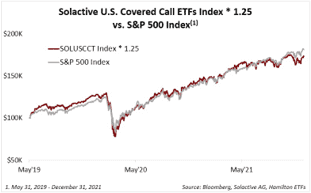
HYLD is a passive index ETF that uses a covered call strategy to enhance yield. It seeks to replicate a 1.25 times multiple of the Solactive U.S. Covered Call ETFs Index TR (SOLUSCCT), comprised of 7 higher-yielding U.S.-focused covered call ETFs.

cibc investors' edge

List of funds that make up HYLD

TICKERNAME
JEPQJPMorgan Nasdaq Equity Premium Income ETF
JEPIJPMorgan Equity Premium Income ETF
QQCCHorizons NASDAQ-100 Covered Call ETF
USCCHorizons US Large Cap Equity Covered Call ETF
HHLHarvest Healthcare Leaders Income ETF
XYLDGlobal X S&P 500 Covered Call ETF
QYLDGlobal X NASDAQ 100 Covered Call ETF
RYLDGlobal X Russell 2000 Covered Call ETF
GLCCHorizons Gold Producer Equity Covered Call ETF
NXFCI Energy Giants Covered Call ETF

The fund is available for purchase in CAD-Hedged (HYLD) and USD-Unhedged (HYLD.U). The main idea behind HYLD ETF is to offer investors a higher yielding alternative to the S&P 500 with similar volatility (as per Hamilton’s website). It’s important to note we are talking here about ‘higher yielding’ alternative and not similar or higher performance that the S&P 500.

Covered call ETF usually protect against downside risk. This being said, the covered call strategy provides limited downside protection. Also, when you write a covered call, you give up some of the stock’s potential gains. Covered call ETFs will tend to have a higher yield and a lower performance that the portfolio they track.

Hamilton’s website: These returns shown above are net of all fees and expenses related to the underlying funds, but before any management fees related to HYLD

Why covered call ETFs are popular?

Covered call ETFs are very popular with Canadian investors. Some of these ETFs managers have billions of dollars under management. Two reasons push investors towards covered call ETFs:

High dividend yield: thanks to the premiums earned when writing call options, the manager under certain conditions can earn premiums and enhance distributions;

Low volatility. Writing a call option is a conservative strategy aimed at reducing volatility;

Great for passive income: if you’re main objective is to achieve high dividend yields and build passive income, then covered call ETFs are a good option. But, remember the high dividend yield comes at a price which very low growth potential.

Summary table Risk vs Benefits of a covered call strategy

AspectDescription
StrategySelling call options on a security already owned in the portfolio
NameCovered call strategy
RiskPotential for limited upside if the stock price rises above the strike price
BenefitGenerates additional income through premium payments received from selling call options
GoalTo earn income from stock holdings while potentially reducing downside risk
UseOften used by investors who are willing to sell their stock at a certain price if it reaches that level
OutcomeIf the stock price stays below the strike price, the option expires worthless, and the investor keeps the premium payment. If the stock price rises above the strike price, the option buyer may exercise their right to buy the stock, and the investor must sell the stock at the strike price, but still keeps the premium payment.
cibc investors' edge

Best Canadian Bank ETFs

Best US Dividend ETFs in Canada!

Top 5 Best Canadian REITs ETF

MER and AUM: HYLD vs ZWH and ZWK

In the table below, we will compare HYLD with 2 strong competitors ZWH BMO US High Dividend Covered Call and ZWK ZWK -BMO Covered Call US Banks. Both ZWH and ZWK write call options to enhance yield and they are both invested in US markets.

Name-TickerAUM Manag
fee
HYLD – Hamilton Enhanced
U.S. Covered Call ETF
1450.65
ZWH –BMO US High
Dividend Covered Call
9180.65
ZWK -BMO Covered
Call US Banks 
6970.65

Source: Barchart

All three ETFs have similar MER. However, I believe that HYLD is more expensive considering it’s ‘an index’ ETF, while ZWK and ZWH from BMO are actively managed.

Performance: HYLD vs ZWH and ZWK

[stock_market_widget type=”table-quotes” template=”color-header-border” color=”#5679FF” assets=”HYLD.TO,ZWH.TO,ZWK.TO” fields=”symbol,ytd_return,three_year_average_return,five_year_average_return” links=”{‘HYLD.TO’:{},’ZWH.TO’:{},’ZWK.TO’:{}}” display_header=”true” display_chart=”false” display_currency_symbol=”true” pagination=”true” search=”false” rows_per_page=”5″ sort_field=”logo_name_symbol” sort_direction=”asc” alignment=”left” api=”yf”]

updated daily

ETFDiv
Yield
HYLD11.76
ZWH5.81
ZWK7.56

Source: Yahoo Finance

[stock_market_widget type=”table-quotes” template=”basic” assets=”HYLD.TO” fields=”name,symbol,price,change_pct,52_week_low,52_week_high” links=”{‘HYLD.TO’:{}}” display_header=”true” display_chart=”true” display_currency_symbol=”true” pagination=”true” search=”false” rows_per_page=”5″ sort_field=”logo_name_symbol” sort_direction=”asc” alignment=”left” api=”yf”]

HYLD Monthly Dividend distribution

AmountFrequencyEx-Div DateRecord DatePay DateDeclare Date
0.1310Monthly3/27/20243/28/20244/5/20243/21/2024
0.1310Monthly2/28/20242/29/20243/7/20242/22/2024
0.1210Monthly1/30/20241/31/20242/9/20241/23/2024

HYLD ETF Holdings

TICKERNAMEWEIGHT
JEPQJPMorgan Nasdaq Equity Premium Income ETF15.1%
JEPIJPMorgan Equity Premium Income ETF14.2%
QQCCHorizons NASDAQ-100 Covered Call ETF13.5%
USCCHorizons US Large Cap Equity Covered Call ETF13.5%
HHLHarvest Healthcare Leaders Income ETF10.4%
XYLDGlobal X S&P 500 Covered Call ETF9.9%
QYLDGlobal X NASDAQ 100 Covered Call ETF7.5%
RYLDGlobal X Russell 2000 Covered Call ETF7.5%
GLCCHorizons Gold Producer Equity Covered Call ETF6.3%
NXFCI Energy Giants Covered Call ETF2.1%

HYLD stock: Sector Allocation

█  Technology 23.5%
█  Health Care 18.7%
█  Consumer Discretionary 8.8%
█  Financials 5.8%
█  Communications 7.6%
█  Industrials 6.6%
█  Consumer Staples 5.5%
█  Energy 4.6%
█  Utilities 2.6%
█  Real Estate 2.0%
█  Materials 13.4%

Practice example: covered call strategy

An investor has 100 shares of Company A in his portfolio. Company A’s share is worth $ 30. He anticipates a stagnation or a slight drop in its price and he is ready to sell them at the price of 26 $. He decides to sell a call with the following characteristics:

• Exercise price: $ 26; Maturity: April; Option price: $ 4; Quantity: 100

He collects the following amount: 4 x 100 or 400 $ (premium)

Two cases should be distinguished:

CASE 1

Company A’s share price rose above the breakeven point of $ 30.

Break-even point = exercise price + premium = 26 + 4 = 30

The buyer of the option will choose to exercise his right to buy and, as the seller of the call, the seller will have to sell the shares at the strike price.

During this operation:

  • the seller sold his shares for $ 26, which constitutes an acceptable loss for him.
  • the seller collected the amount of the premium of $ 4, which helped boost the performance of his investments (yield).

CASE 2

Company A’s share price has fallen below the breakeven point of $ 30.

The buyer of the option will choose not to exercise his right to buy and the seller will not have to sell his shares.

Thanks to this operation, the seller keeps his shares in the portfolio and he collected the amount of the premium which generated an additional return.

What’s JEPI’s investment objective?

The JPMorgan Equity Premium Income ETF (JEPI) is an income focused covered call ETF. It’s ideal for conservative investors who are seeking income and moderate growth. The manager of JEPI invests in a portfolio of stocks that combine 3 characteristics:

  • Part of the S&P 500, so in other word large cap stocks only;
  • Low volatility stocks, meaning, stocks that fluctuate far less than the market. This is generally the case of defensive stocks operating in stable industries. The main metric used by the fund manager of JEPI to assess volatility is the Beta. Beta is a coefficient risk, for instance a Beta of 0.5 would indicate that the stock exhibits 50% of the volatility of the stock market;
  • Value stocks: the analysts’ team of JEPI will conduct a fundamental bottom up approach to select only stocks that are considered undervalued.

This post is also available in video format.

CIBC Investors' edge

To enhance yield, JEPI issues call options to collect premiums. Issuing call options accomplishes two objectives:

  • Enhance the distribution yield;
  • Lower the risk.

Fund Assets 
$14.36bn
Number of Holdings 
123

Why add JEPI to your portfolio?

Adding JEPI (JPMorgan Equity Premium Income ETF) to your portfolio can bring several benefits, especially for those looking for additional income with managed risk levels. Here’s a detailed breakdown of why JEPI might be a worthwhile addition:

Additional Income with Managed Volatility

JEPI is known for its attractive yield, which is achieved through a strategy of issuing call options on equity positions. This method provides investors with a steady income stream, making it an appealing option for those in search of high yields without the high volatility often associated with equity investments. Its performance is designed to be less volatile compared to direct investments in equities or equity indexes like the S&P 500, making it a safer bet for conservative investors or those nearing retirement.

Alternative to Long-Duration Bonds

In a low-interest-rate environment, traditional bond investments might not offer sufficient returns. JEPI can serve as an alternative, providing potentially higher income without the interest rate risk associated with long-duration bond ETFs. This feature makes JEPI a versatile tool in diversifying income sources within a portfolio.

Risk Reduction for Equity Portfolios

Incorporating JEPI can help mitigate the overall risk of an equity-focused portfolio. By design, JEPI’s strategy of option writing can smooth out market volatility, offering a more stable return profile. This makes it an excellent choice for investors looking to dampen the risk without completely moving away from equities.

Is JEPI a good investment?

When considering JEPI as an investment, it’s essential to weigh its positives and negatives to determine if it aligns with your investment goals and risk tolerance.

Positives

JEPI stands out for its attractive yield, which is primarily derived from the income earned by issuing call options. This strategy not only provides a steady income stream but also contributes to lower volatility compared to direct equity investments or equity index ETFs like the S&P 500. This characteristic makes JEPI particularly appealing to conservative investors and income seekers who prioritize stability and consistent returns.

The fund’s performance is notably more robust in high volatility environments, where the premiums earned from the call options can increase, thereby enhancing the income generated. For investors interested in an options strategy without the complexity and time commitment, JEPI offers a convenient solution, effectively saving time and effort. Additionally, its relatively low fees, with a total expense ratio of 0.35%, make it an economically viable option for income generation.

Another significant advantage of JEPI is its diversification. The ETF maintains a broad exposure across various sectors, thereby mitigating sector-specific risks and contributing to a more stable investment experience.

Negatives

However, there are considerations to keep in mind. In bull markets, JEPI’s strategy of issuing call options may lead to underperformance relative to the broader equity market. This is because the call options cap the upside potential, which means that while the income from option premiums can provide some cushion, it may not fully capture the extent of a market rally. This trade-off between lower volatility and capped upside potential is a crucial factor to consider, especially for investors who might prefer to participate more fully in market upswings.

In conclusion, JEPI offers a compelling mix of income potential and reduced volatility, making it an attractive option for certain investor profiles. However, its relative performance in bull markets and the inherent trade-offs of its options strategy necessitate a careful assessment of how JEPI fits within an individual’s broader investment strategy and objectives.

Expected investment outcome with covered call ETFs

In a robust bull market, where the price of the underlying stock rises above the strike price plus the option premium, the covered call writer will underperform.

Due to earning the option premium, the covered call writer can normally anticipate to outperform merely holding the stock in flat, decreasing, and mildly rising markets.

 Covered call strategy
Bull Marketlags in terms of
performance
Modest Bull MarketOutperforms the index
Volatile market
(frequent ups and downs)
Outperforms the index
Beat marketOutperforms the index

CIBC Investors' edge

Why covered call ETFs are popular?

Covered call ETFs are very popular with American and Canadian investors. Two reasons push investors towards covered call ETFs:

  • High dividend yield: thanks to the premiums earned when writing call options, the manager under certain conditions can earn premiums and enhance distributions;
  • Low volatility. Writing a call option is a conservative strategy aimed at reducing volatility;
  • Great for passive income: if you’re main objective is to achieve high dividend yields and build passive income, then covered call ETFs are a good option. But, remember the high dividend yield comes at a price which very low growth potential.

JEPI ETF Performance and Dividend yield

As of July 19th, 10.92% is the Dividend yield as per Yahoo Finance.

3
Months
YTD1 Year3 Yrs
Trailing returns5.70%9.88%9.88%8.83%
As of Yahoo finance – Feb 5th, 2024

[stock_market_widget type=”table-quotes” template=”basic” assets=”JEPI” fields=”logo_name_symbol,price,change_pct,52_week_low,52_week_high” links=”{‘JEPI’:{}}” display_header=”true” display_chart=”false” display_currency_symbol=”true” pagination=”true” search=”false” rows_per_page=”5″ sort_field=”logo_name_symbol” sort_direction=”asc” alignment=”left” api=”yf”]

JEPI vs JEPQ

When considering whether JEPI and JEPQ (JPMorgan Nasdaq Equity Premium Income) ETFs are good investments, it’s essential to understand the key differences between the two.

JEPI

JEPI, an ETF focused on issuing call options, offers several advantages that might appeal to certain investors. Firstly, it boasts an attractive yield derived from the money earned through call option writing. Moreover, JEPI exhibits lower volatility compared to investing directly in an S&P 500 index ETF like SPY, making it a suitable option for conservative investors and income seekers.

CIBC Investors' edge

Another positive aspect of JEPI is its ability to capitalize on high volatility, which often translates to increased premiums for the fund. Additionally, investors can save valuable time and effort by avoiding the need to personally write call options on the S&P 500, as JEPI handles this strategy on their behalf. Furthermore, with relatively low fees of 0.35% total expense ratio, JEPI presents a cost-effective investment choice. The ETF’s diversification across various sectors adds another layer of appeal, spreading risk across different industries.

However, JEPI does have some drawbacks that potential investors should consider. In bull markets, it is expected to underperform the S&P 500 index due to the call option writing strategy, which reduces volatility but also limits its performance during bullish periods.

JEPQ

On the other hand, the JEPQ ETF, focused on writing call options on the NASDAQ 100, offers similar benefits to JEPI. It provides an attractive yield from call option writing and boasts lower volatility compared to a NASDAQ 100 ETF like QQQ, appealing to conservative investors and income seekers.

However, JEPQ has some significant negatives that investors need to be aware of. It tends to perform poorly during bullish market conditions, as the covered call strategy curtails the upside potential of the NASDAQ 100. Additionally, the covered call strategy becomes less effective in unpredictable markets, which could impact the ETF’s overall performance.

Furthermore, JEPQ’s lack of diversification is a notable concern, with a heavy concentration in tech firms dominating the fund. This lack of diversification exposes investors to higher risks compared to a more balanced investment approach.

Conclusion

Ultimately, whether JEPI or JEPQ is a good investment depends on individual investor preferences, risk tolerance, and market outlook. JEPI’s lower volatility and diversification across sectors could be attractive to those seeking stability and income, while JEPQ’s focus on the NASDAQ 100 may appeal to tech-focused investors. It is crucial for investors to conduct thorough research, consider their financial goals, and consult with a financial advisor to make informed investment decisions.

JEPI ETF Holdings

Top 10 Holdings

NameWeight
%
PROGRESSIVE CORP/THE1.63%
HERSHEY CO/THE COMMON1.62%
UNITEDHEALTH GROUP INC1.62%
EXXON MOBIL CORP COMMON1.60%
BRISTOL-MYERS SQUIBB CO1.58%
ABBVIE INC COMMON STOCK1.55%
PEPSICO INC COMMON STOCK1.51%
COCA-COLA CO/THE COMMON1.47%
ELI LILLY & CO COMMON1.45%
HONEYWELL INTERNATIONAL1.43%
Please consult issuers’ website for most up to date data


JEPI sector Exposure

NameWeight
%
Communication Services 3.8%
Consumer Discretionary 5.1%
Consumer Staples 11.9%
Energy 2.8%
Financials 12.2%
Health Care 12.5%
Industrials 12.6%
Information Technology 11.1%
Materials 3.2%
N/A 0.0%
Other 13.9%
Real Estate 2.6%
Utilities 7.7%
Please consult issuers’ website for most up to date data

CIBC Investors' edge


JEPI Dividend Schedule

AmountFrequencyEx-Div
Date
Record
Date
Pay
Date
Declare
Date
0.3902Monthly12/1/202312/4/202312/6/202312/30/2022
0.3589Monthly11/1/202311/2/202311/6/202312/30/2022
0.3633Monthly10/2/202310/3/202310/5/202312/30/2022
0.3382Monthly9/1/20239/5/20239/7/202312/30/2022
0.2904Monthly8/1/20238/2/20238/4/202312/30/2022
0.3593Monthly7/3/20237/5/20237/7/202312/30/2022
0.3654Monthly6/1/20236/2/20236/6/20235/31/2023

 Video